Zoyel · video
How ZoyeMed 3.0 works
Corporate Zoyel · 2026-11-06 · en
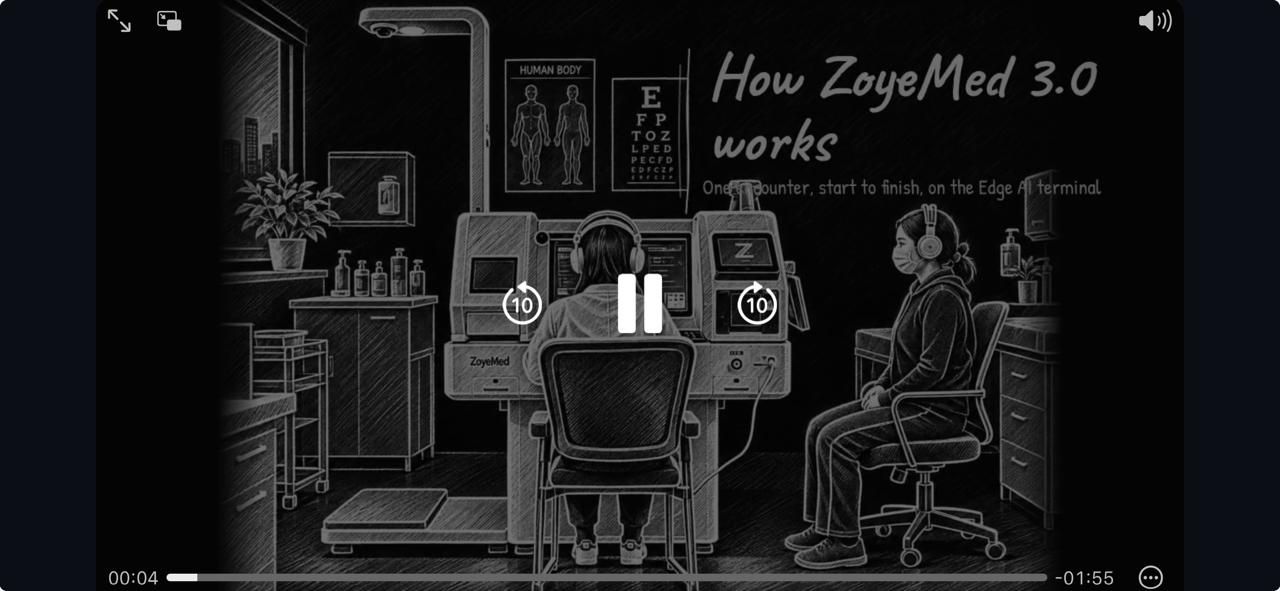
How ZoyeMed 3.0 Works: one clinical encounter, start to finish ZoyeMed 3.0 Edge AI is a compact clinical terminal that lets a trained nurse carry out a complete consultation: history, examination and point-of-care tests. A remote doctor then reviews everything and signs the prescription. This short animation follows one patient through the whole process.
The process, step by step
1. The nurse at the terminal. A trained nurse, not a doctor, sits in front of the terminal and runs the encounter. The 21.5″ nurse monitor tells her what to do next at every step, and a 4K HDR camera lets the remote doctor see the room.
2. The camera finds the patient. The patient sits to the right of the terminal. A 4K PTZ camera on top turns to find and follow them. Their identity is confirmed, consent is recorded and their record opens.
3. Height, weight and temperature. The patient steps onto the station on the left. An ultrasound sensor overhead measures height, a load-cell scale measures weight and calculates BMI, and an infrared thermometer takes their temperature without contact.
4. History, in the patient's own language. The terminal speaks to the patient in their own language. It asks about symptoms and how long they have had them, past illnesses and operations, current medicines, allergies, and family and lifestyle history, and records the answers as they go.
5. A guided examination. The patient screen shows the nurse where to place each probe for the 12-lead ECG, spirometry, digital stethoscope, dermascope, otoscope, fetal Doppler and blood pressure. Each reading is captured straight into the record.
6. One blood draw, four instruments. Once it has analysed everything so far, the terminal tells the nurse which tests are needed and she draws a single blood sample. The built-in instruments do the rest:
• Haematology analyser (top front right): full blood count
• Biochemistry analyser (top front left): liver, kidney, lipids, glucose, HbA1c
• Immunofluorescence analyser (left side): cardiac markers, CRP, thyroid, vitamin D and more
• AI camera (front left, below): reads rapid tests and urine strips
Results go back into the record next to the history and the examination.
7. A remote doctor decides. A licensed doctor joins by video from anywhere and goes through everything: history, vitals, examination, ECG, spirometry, lab results and the AI's suggestions, which they can accept, edit or reject. The doctor finalises and signs the prescription. It includes advice on diet, lifestyle and what to watch out for, plus the patient's health trajectory over time, by body system.
8. After the visit, the app takes over. The patient app sends medicine reminders based on the actual prescription, books follow-ups with the same doctor, and measures outcomes through symptom check-ins and home readings that flow back into the record.
Why it matters
One terminal gives you a complete encounter: history, examination, investigations, a doctor's decision and follow-up. It runs online or fully offline, keeps raw data on site, and lets one doctor reach patients in clinics, hospital outpatient departments and remote locations.
The AI supports clinical decisions and does not replace the doctor. A licensed clinician makes every final decision.
Chapters
0:00 Introduction
0:09 The nurse at the terminal
0:18 The camera finds the patient
0:29 Height, weight and temperature
0:42 History in the patient's language
0:55 Guided examination
1:08 One blood draw, four instruments
1:22 The remote doctor decides
1:36 After the visit: the patient app
1:50 Powered by Zoyel AI
Powered by Zoyel AI · ZoyeMed 3.0 Edge AI
Learn more: zoyel.com
The readings and app screens in this animation are illustrative.
#ZoyeMed #ZoyelAI #DigitalHealth #Telemedicine #PointOfCare #HealthTech #PrimaryCare #ClinicalAI #RemoteCare #EdgeAI
General health information, not a diagnosis. In an emergency in India call 112, or 108 for an ambulance.